



A platform built to manage tasks, teams, and operational workflows
ForgeOps is designed for industrial maintenance teams working in demanding environments. It tracks inspections, assigns maintenance tasks to crews, and provides supervisors with real-time visibility into the status of critical plant components.
Software designed for the realities of industrial maintenance
ForgeOps was built around a simple operational need: ensuring that critical components inside a steel plant are inspected, maintained, and accounted for at all times. Maintenance crews use the system to receive inspection tasks, report component status, and track work as it happens across the facility.
The platform allows administrators to structure the plant digitally — defining components, maintenance templates, teams, and user roles. Tasks can then be generated from these templates and delegated to specific crews or branches, creating a clear operational record of what has been checked, what requires attention, and what remains pending.
Complete Stack
Core stack
Next.js
React
TypeScript
Prisma
PostgreSQL
Frontend
Tailwind CSS
Radix UI
Mantine
Framer Motion
Tremor
Backend & Data
NextAuth
Prisma ORM
PostgreSQL
Redis (Upstash)
Supabase
Libraries
React Hook Form
Zod
React Query
UploadThing
Novu Notifications
Luxon / date-fns
Axios
Capabilities
ForgeOps Features
Component Registry
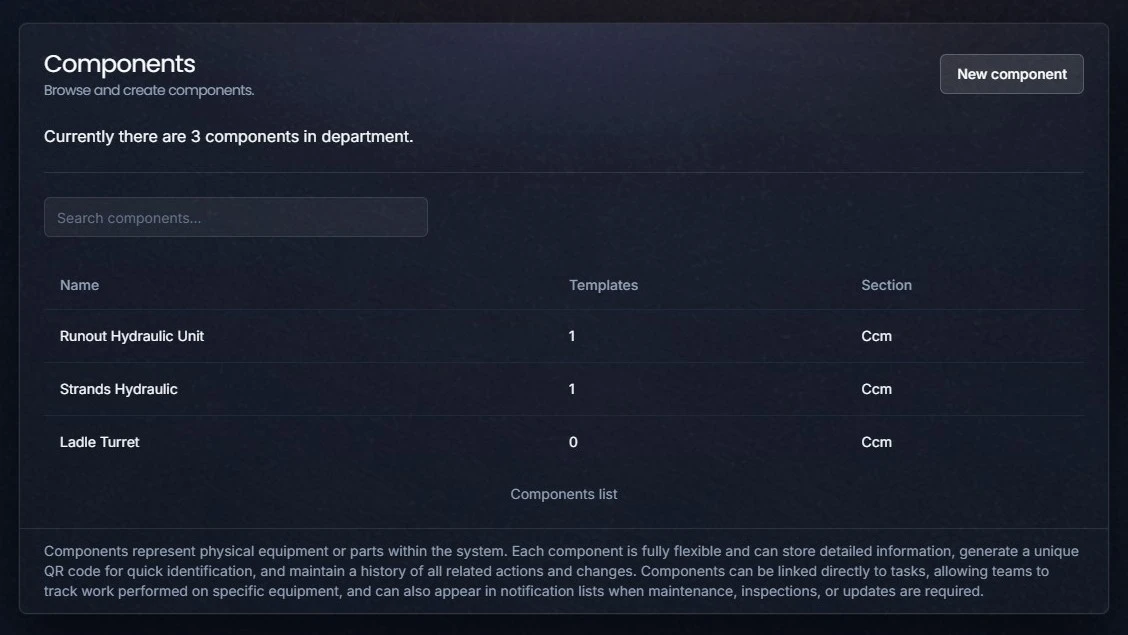
Every physical element in the plant can be represented in the system. Administrators define components such as conveyors, furnaces, motors, valves, and sensors. Each component becomes a trackable entity that can receive inspections, maintenance tasks, and operational records. This creates a digital structure of the facility where equipment status can be monitored over time.
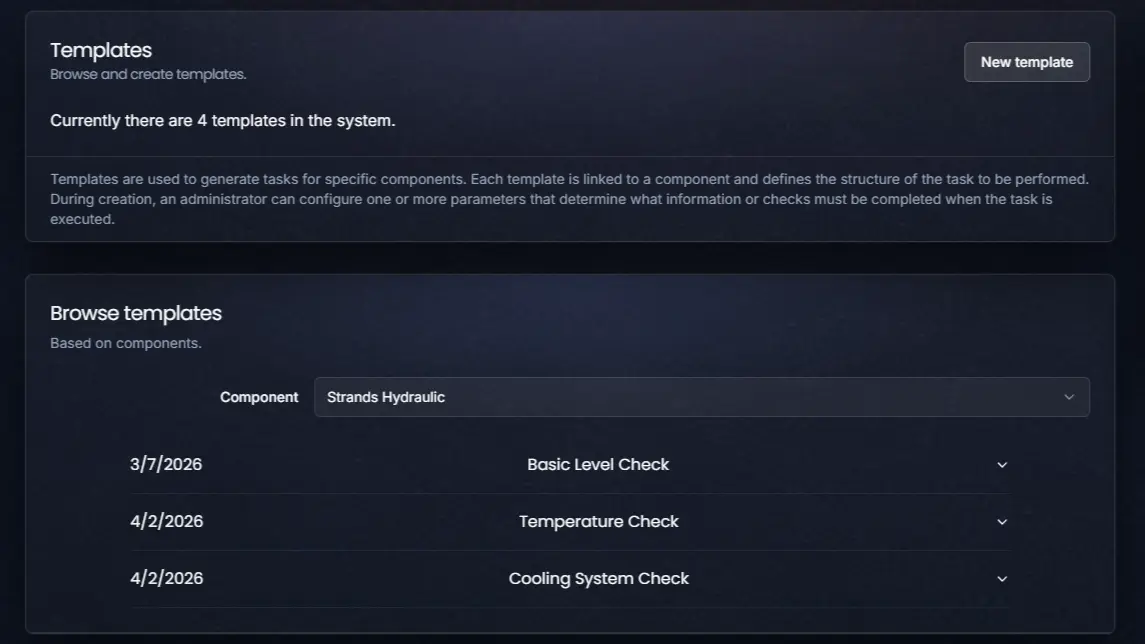
Maintenance Templates
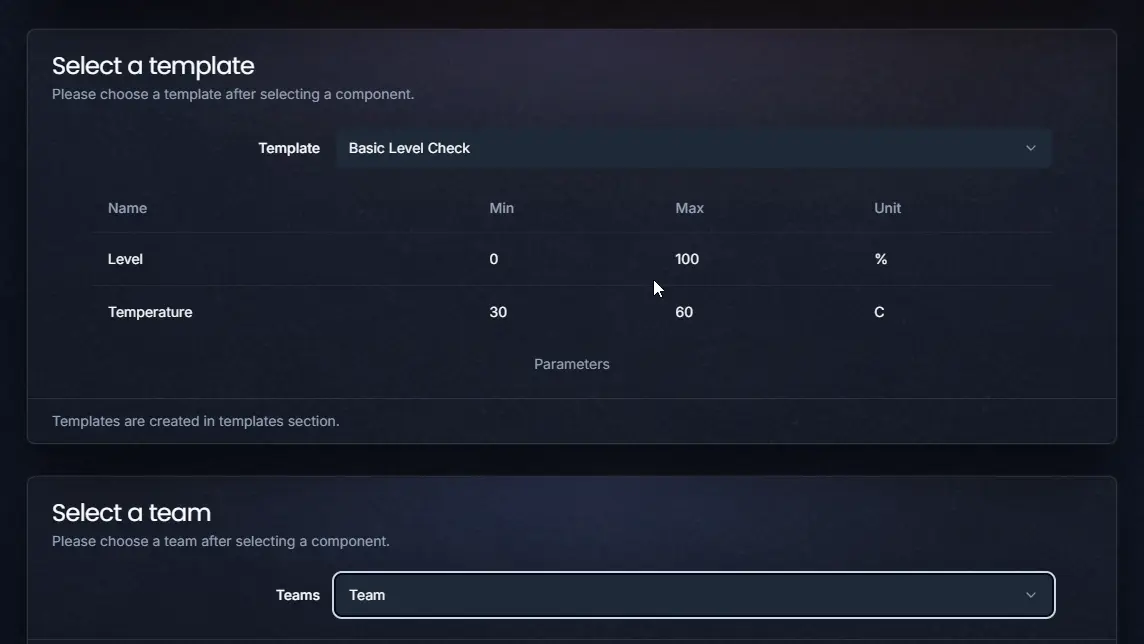
Recurring inspections and maintenance routines are defined through templates. Templates allow supervisors to define the exact steps required when checking a component — including inspection criteria, reporting fields, and required confirmations. Once created, templates can generate tasks automatically and ensure maintenance procedures remain consistent.
Task Delegation to Crews
Maintenance work is assigned directly to users, teams, or operational branches. Each task contains a component reference, template instructions, priority level, and completion status. Crew members receive tasks and report back once inspection or maintenance is completed.
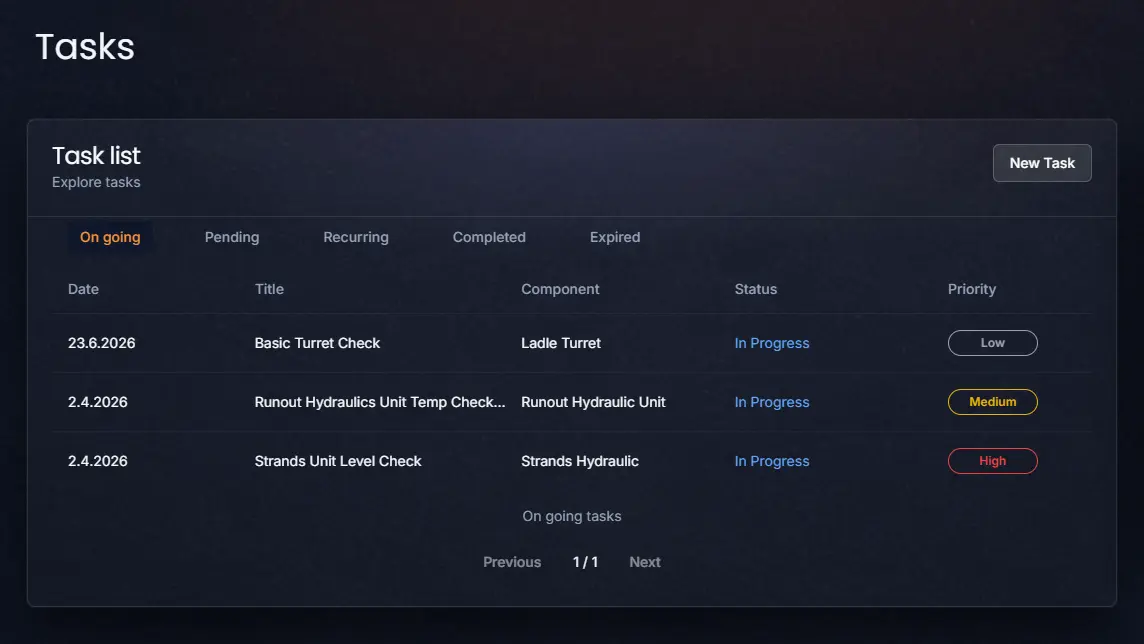
Real-Time Task Tracking
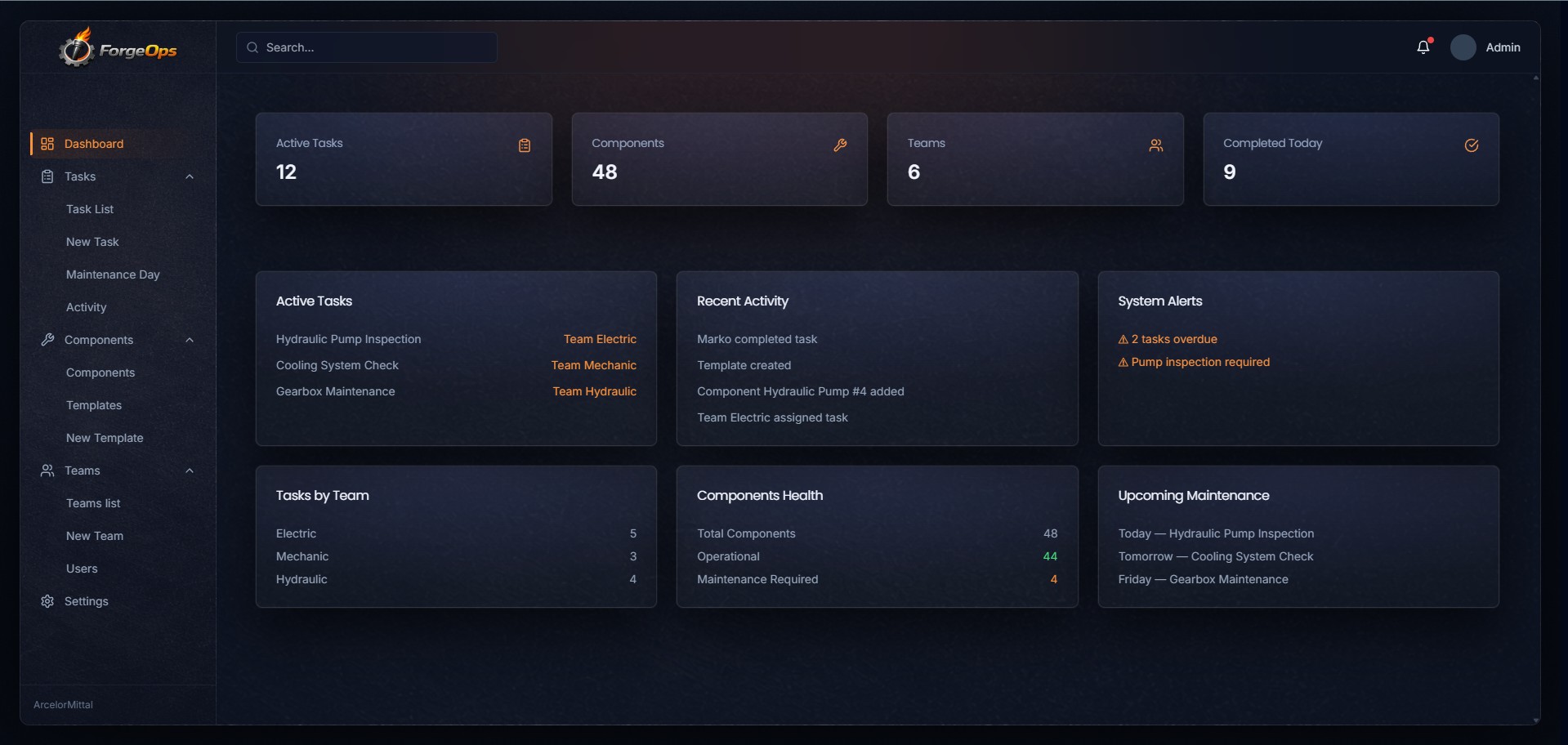
Supervisors can monitor work as it happens across the facility. The dashboard provides visibility into pending inspections, tasks currently in progress, completed maintenance records, and overdue checks. This ensures no critical component goes uninspected.
Team structure & workflows
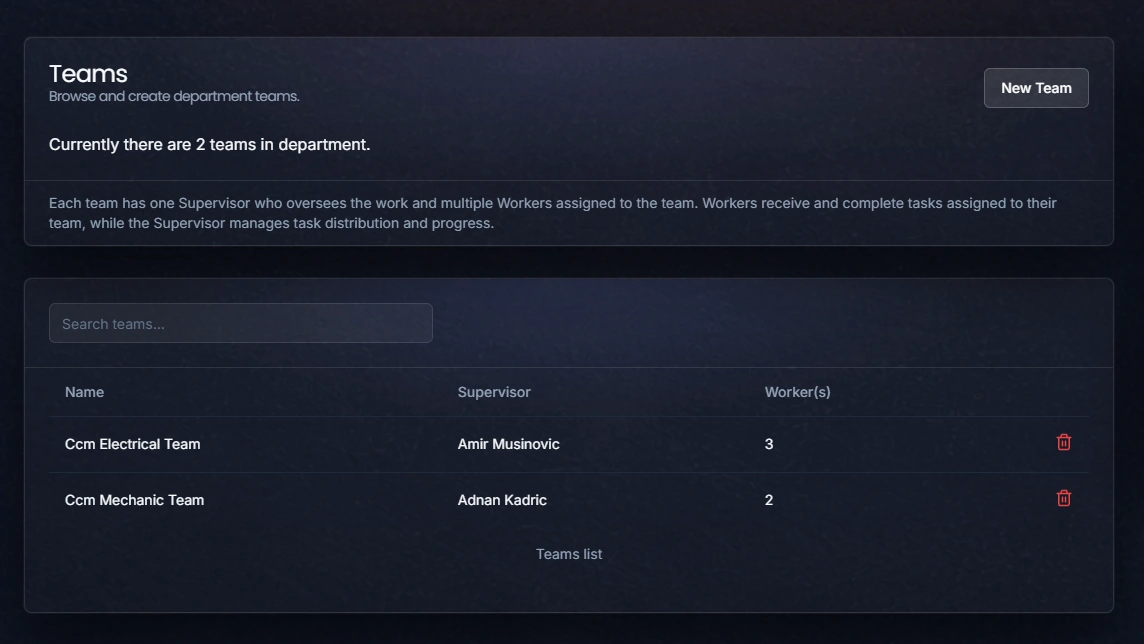
ForgeOps mirrors the organizational structure of the plant. Administrators can create users, maintenance crews, operational branches, and role-based permissions. This allows the system to delegate work correctly and restrict access where needed.
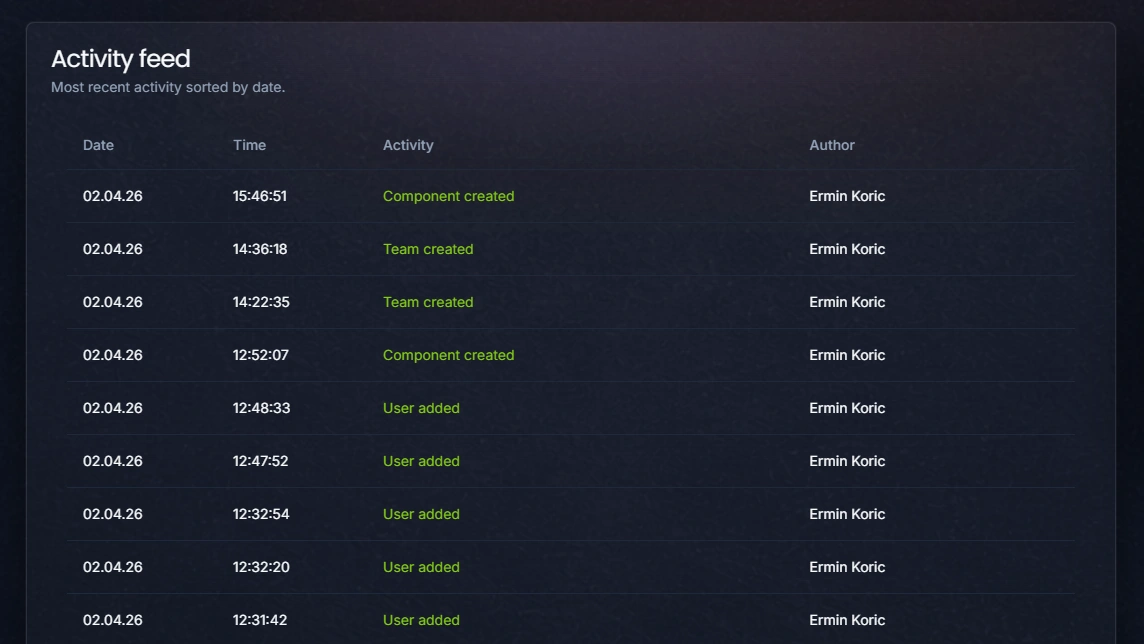
Maintenance History
Every task performed on a component becomes part of its maintenance history. This provides a clear operational record showing who inspected the component, when it was checked, what issues were reported, and when maintenance was completed. Over time this builds a reliable log of plant equipment condition.
Engineering
Engineering Highlights
Role-Based Authorization
ForgeOps implements a hierarchical permission system that reflects the structure of a steel plant. Administrators, supervisors, and maintenance crews each have different levels of access, ensuring tasks, components, and operational data are visible only to the roles responsible for them.
Template Driven Task Generation
Maintenance work is structured through reusable templates that define inspection steps, reporting fields, and verification requirements. These templates generate tasks automatically, ensuring maintenance procedures remain consistent across crews and shifts.
Relational Data Model
The system models plant operations using a relational schema built with Prisma and PostgreSQL. Components, templates, tasks, users, teams, and branches are connected through clear relationships, allowing maintenance activities to be traced directly to both equipment and personnel.
Operational Visibility
The ForgeOps dashboard aggregates task activity across the facility, providing supervisors with a real-time overview of inspections, completed maintenance, and overdue work.
Lessons learned
What this project taught me
Designing Permission Systems
ForgeOps required a role structure that reflects real operational hierarchies inside a steel plant. Administrators, supervisors, and maintenance crews all interact with the system differently, which meant designing permissions that remain flexible while still protecting critical operations.
Modeling Industrial Workflows
Maintenance in industrial environments follows strict procedures. Translating those procedures into templates, tasks, and component relationships required careful schema design so inspections and reporting remain consistent across crews and shifts.
Managing Complex Dashboards
The dashboard aggregates multiple operational signals such as active tasks, overdue inspections, and maintenance history. Designing it required balancing visibility with simplicity so supervisors can quickly understand the current state of the plant.
Building for Real Environments
Unlike generic task management software, ForgeOps is designed for high-risk industrial environments. The system prioritizes clarity, traceability, and structured workflows so maintenance crews can reliably track the condition of critical equipment.
Ermin Koric
Software made simple, thoughtful, lasting.
Great software isn’t decoration — it’s architecture, logic, and deliberate structure.
Developed by — Ermin
All rights reserverd © 2026